Resolving the Context Dissipation Problem
Virtual planning sessions regularly produce energetic consensus that subsequently evaporates within forty-eight hours. Team members reach clear agreements during video conferences, yet individual contributors record divergent recollections once the call disconnects. Important implementation parameters get overlooked, delivery deadlines slip, and cross-functional partners discover conflicting assumptions only when final deliverables fail integration checks.
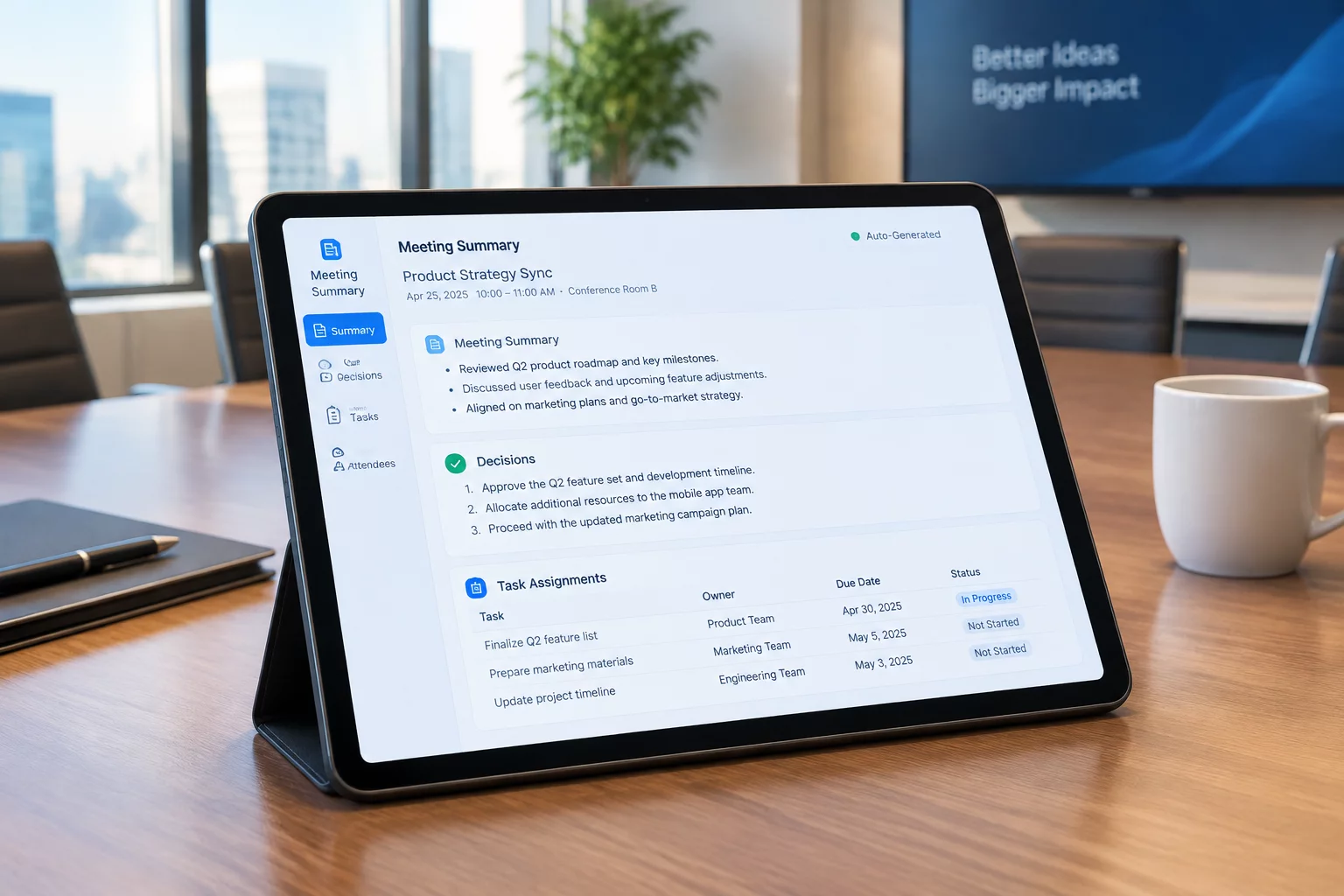
Automated handoff software addresses this vulnerability by processing conference audio streams live to extract explicit decisions, task definitions, and designated assignees. By synthesizing speech into verified work tickets during the conversation itself, participants can confirm scope and technical boundaries while everyone remains in the same room. The system closes the dangerous operational void where verbal intentions traditionally struggle to translate into tangible engineering backlog items.
Audit Your Cross-Team Handoff Lanes
Identify exactly where requirements get lost between product strategy and engineering execution with our structured responsibility matrix.
Observed Efficiency and Accuracy Metrics
Deploying automated transition engines replaces slow manual note redistribution with immediate backlog synchronization. Field audits across distributed software squads reveal substantial reductions in turnaround delays alongside higher clarity scores on incoming sprint tickets.
| Operational Parameter | Observed Specification | Target Benchmark |
|---|---|---|
| Meeting-to-Backlog Latency | 4.6 hours manual turnaround | < 30 seconds instantaneous sync |
| Action Item Owner Attribution | 61% verified ownership | 98.5% explicit assignee resolution |
| Decision Detail Retention | 48% retained past 72 hours | 96% archived with verbatim sound bites |
| Unplanned Alignment Follow-ups | 3.4 clarifying syncs per sprint | < 0.6 syncs per sprint cycle |
Production Rollout and Best Practices
Implementing an automated handoff assistant requires careful integration with active issue tracking repositories and instant messaging channels. The engine monitors speech markers such as ownership declarations, timeline estimates, and contingency warnings to construct draft tasks. When the host prepares to dismiss the session, the software presents a condensed confirmation dashboard where attendees validate all recorded deliverables in thirty seconds.
Engineering Team Onboarding Protocol
High-performing teams establish concise verbal discipline to help algorithmic listeners classify commitments with maximum precision. Standardizing simple turn-of-phrase conventions prevents casual exploratory dialogue from creating unwanted task clutter in production queues.
- Articulate the designated owner and deliverable target date explicitly before transitioning between agenda items.
- Configure an intermediate review lane so team leads can approve drafted work items before issues trigger sprint board notifications.
- Embed short recorded rationale clips directly into issue descriptions so external partners understand why architectural choices were finalized.